
Criteria for self-assessment are changing
Historically, you may have had to file a tax return if your income exceeded the point where the personal allowance starts to be tapered away. This has changed for 2023/24. However, the Autumn Statement also made a further change that will apply from 2024/25. What’s the full story?
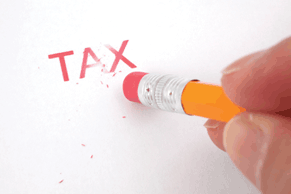
If your tax affairs are relatively straightforward, it can be very frustrating to have to complete a tax return every year. In the past, HMRC has insisted on issuing returns for the following reasons, irrespective of other circumstances:
- Income exceeds £100,000 (the personal allowance abatement threshold);
- There is a liability to the high income child benefit charge (HICBC);
- The individual is a company director.
HMRC now accepts that being a company director is not a valid reason to issue a tax return in and of itself. For 2023/24, it was announced that the income threshold would increase to £150,000, meaning you may be able to request your return for this year be withdrawn if the only reason you have been in self-assessment was that your earnings were more than £100,000. However, the other criteria for self-assessment remain unchanged, so if you have earnings of, say, £120,000 but also have untaxed income of £5,000, you will still need to complete a return.
The 2023 Autumn Statement announced that for 2024/25 the income threshold will be removed altogether. The government is also intending to allow those liable to the HICBC to pay it via a PAYE coding adjustment, though there is no current timetable for this.
Related Topics
-
Why is HMRC checking PVA more often?
Your business imports goods and accounts for VAT by applying postponed VAT accounting (PVA) on its returns. HMRC is scrutinising returns and issuing large assessments in some cases. What can you do to reduce the risk of getting it wrong?
-
HMRC text or scam? Check before you act
HMRC is contacting some taxpayers by text this week about overdue Self Assessment liabilities and is also sending updates about VAT registration applications. At the same time, it has expanded its guidance on spotting fake HMRC messages on social media. How can you tell whether a message is genuine?
-
Electronic VAT return and payment due
 This website uses both its own and third-party cookies to analyze our services and navigation on our website in order to improve its contents (analytical purposes: measure visits and sources of web traffic). The legal basis is the consent of the user, except in the case of basic cookies, which are essential to navigate this website.